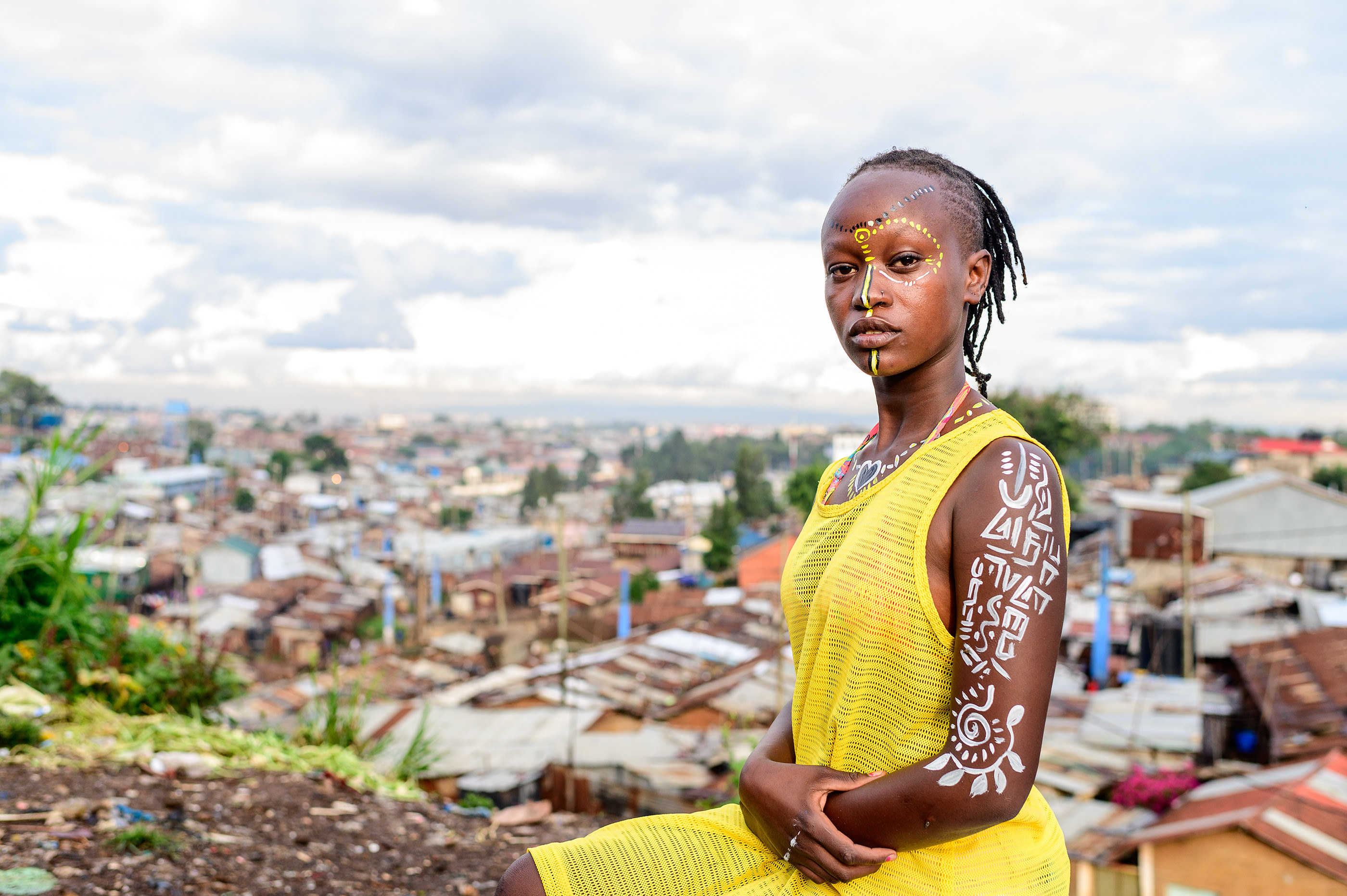
David Avido, 25, years old is a fashion designer born and bred in Kibera slums, Nairobi. His career in art
started off as a dancer before shifting to fashion. This switch came naturally to him and a few years into
the art, indulge in creative arts that is inclusive. Avido has dressed celebrities and influencers from all
walks of life including the president of Kenya through his fashion brand Lookslike Avido.
Gordwin Odhiambo
Every year, the government of Kenya recognizes community change makers going beyond self to constructive
come up with solution in difficlut circumstances. He was one of 68 Kenyans recognized by the President of
Kenya with the Uzalendo Award for outstanding community service during the Coronavirus Pandemic,. Avido
spearheaded a free mask initiative that provided nearly 23,000 free, reusable masks to Nairobi residents. He
has also worked with friends and partners to distribute food packs to hundreds of families in Kibera.
As a dancer, he’s aware of how difficult it can be for some groups to be appreciated on what they’re doing
especially the artful act ivies. 'People’s abilities are beyond what you can see physically', he says, he
has experienced and seen that and he wants people from his community to see it too.
For now, David is taking a new path, He calls it sustainable inclusion where everyone has access to his new
collections. In his latest additions, mostly people were the once who embraced people with varying
abilities. He included the deaf, people with vitiligo, the physically disabled, Beatrice who’s an albino,
and the transgender. This is a powerful gesture and a big statement not only for the brand but for the
bigger picture of inclusion, privilege, and stereotyping. He is using his following to combat one of the
main societal issues facing the slums of Kibera; inclusion of the differently disabled and other gender
identifying people.
Letoya Johnstone is a trans-gender, a fashion model, and a designer born and bred in Kibera slums Nairobi,
Avido incorporated her into the project by allowing her to be the catwalk coach of the fashion’s festival.
As a transgender woman, she was profound, people get to see what she can do that is beyond her gender.
For Letoya Johnston, Avido incorporated her into the community by picking her to be the catwalk coach of the
fashion’s festival. As a transgender woman, she was profound, people get to see what she can do that is
beyond her gender.
Having the opportunity to just be outside and do something that will be seen nationwide is a big achievement
for them in personal terms. This is sustainable inclusion and they can relate with the Lookslike Avido’s
brand for a while unlike one day inclusive activities they do and forget.
Gordwin Odhiambo
This was Letoya’s first work with people who are differently able (First model runway with all differently
able people in Kenya from a known designer), and for her, it was more than an eye opening and she likes to
do things that will open her mind. This is something bigger, Letoya said over the phone. It goes a long way
in creating awareness and accessibility to other issues that have made this group to be highly vulnerable
and increasingly marginalized. The need for inclusion in Kibera slums is one of the fundamental human rights
issues. People living with disabilities have been known to live in homes and institutions, and this has
separated them from the community.
Gordwin Odhiambo
Letoya added that, because you’re coming from Kibera you do not need to be weak. She encouraged people like
Avido to continue doing their powerful grassroots activities that empowers the community with the following
they have. Let’s not wait for the government, independent bodies or NGOs to do it. Let’s start and they can
join us.
Archive - Arts and Culture
Reaching Equality Through Fashion
Gordwin Odhiambo
July 23, 2020
David Avido, 25, years old is a fashion designer born and bred in Kibera slums, Nairobi. His career in art
started off as a dancer before shifting to fashion. This switch came naturally to him and a few years into
the art, indulge in creative arts that is inclusive. Avido has dressed celebrities and influencers from all
walks of life including the president of Kenya through his fashion brand Lookslike Avido.
Gordwin Odhiambo
Every year, the government of Kenya recognizes community change makers going beyond self to constructive
come up with solution in difficlut circumstances. He was one of 68 Kenyans recognized by the President of
Kenya with the Uzalendo Award for outstanding community service during the Coronavirus Pandemic,. Avido
spearheaded a free mask initiative that provided nearly 23,000 free, reusable masks to Nairobi residents. He
has also worked with friends and partners to distribute food packs to hundreds of families in Kibera.
As a dancer, he’s aware of how difficult it can be for some groups to be appreciated on what they’re doing
especially the artful act ivies. 'People’s abilities are beyond what you can see physically', he says, he
has experienced and seen that and he wants people from his community to see it too.
For now, David is taking a new path, He calls it sustainable inclusion where everyone has access to his new
collections. In his latest additions, mostly people were the once who embraced people with varying
abilities. He included the deaf, people with vitiligo, the physically disabled, Beatrice who’s an albino,
and the transgender. This is a powerful gesture and a big statement not only for the brand but for the
bigger picture of inclusion, privilege, and stereotyping. He is using his following to combat one of the
main societal issues facing the slums of Kibera; inclusion of the differently disabled and other gender
identifying people.
Letoya Johnstone is a trans-gender, a fashion model, and a designer born and bred in Kibera slums Nairobi,
Avido incorporated her into the project by allowing her to be the catwalk coach of the fashion’s festival.
As a transgender woman, she was profound, people get to see what she can do that is beyond her gender.
For Letoya Johnston, Avido incorporated her into the community by picking her to be the catwalk coach of the
fashion’s festival. As a transgender woman, she was profound, people get to see what she can do that is
beyond her gender.
Having the opportunity to just be outside and do something that will be seen nationwide is a big achievement
for them in personal terms. This is sustainable inclusion and they can relate with the Lookslike Avido’s
brand for a while unlike one day inclusive activities they do and forget.
Gordwin Odhiambo
This was Letoya’s first work with people who are differently able (First model runway with all differently
able people in Kenya from a known designer), and for her, it was more than an eye opening and she likes to
do things that will open her mind. This is something bigger, Letoya said over the phone. It goes a long way
in creating awareness and accessibility to other issues that have made this group to be highly vulnerable
and increasingly marginalized. The need for inclusion in Kibera slums is one of the fundamental human rights
issues. People living with disabilities have been known to live in homes and institutions, and this has
separated them from the community.
Gordwin Odhiambo
Letoya added that, because you’re coming from Kibera you do not need to be weak. She encouraged people like
Avido to continue doing their powerful grassroots activities that empowers the community with the following
they have. Let’s not wait for the government, independent bodies or NGOs to do it. Let’s start and they can
join us.
Music
The Gamer Who Couldn't Stop
Gordwin Odhiambo
July 23, 2020
David Avido, 25, years old is a fashion designer born and bred in Kibera slums, Nairobi. His career in art
started off as a dancer before shifting to fashion. This switch came naturally to him and a few years into
the art, indulge in creative arts that is inclusive. Avido has dressed celebrities and influencers from all
walks of life including the president of Kenya through his fashion brand Lookslike Avido.
Gordwin Odhiambo
Every year, the government of Kenya recognizes community change makers going beyond self to constructive
come up with solution in difficlut circumstances. He was one of 68 Kenyans recognized by the President of
Kenya with the Uzalendo Award for outstanding community service during the Coronavirus Pandemic,. Avido
spearheaded a free mask initiative that provided nearly 23,000 free, reusable masks to Nairobi residents. He
has also worked with friends and partners to distribute food packs to hundreds of families in Kibera.
As a dancer, he’s aware of how difficult it can be for some groups to be appreciated on what they’re doing
especially the artful act ivies. 'People’s abilities are beyond what you can see physically', he says, he
has experienced and seen that and he wants people from his community to see it too.
For now, David is taking a new path, He calls it sustainable inclusion where everyone has access to his new
collections. In his latest additions, mostly people were the once who embraced people with varying
abilities. He included the deaf, people with vitiligo, the physically disabled, Beatrice who’s an albino,
and the transgender. This is a powerful gesture and a big statement not only for the brand but for the
bigger picture of inclusion, privilege, and stereotyping. He is using his following to combat one of the
main societal issues facing the slums of Kibera; inclusion of the differently disabled and other gender
identifying people.
Letoya Johnstone is a trans-gender, a fashion model, and a designer born and bred in Kibera slums Nairobi,
Avido incorporated her into the project by allowing her to be the catwalk coach of the fashion’s festival.
As a transgender woman, she was profound, people get to see what she can do that is beyond her gender.
For Letoya Johnston, Avido incorporated her into the community by picking her to be the catwalk coach of the
fashion’s festival. As a transgender woman, she was profound, people get to see what she can do that is
beyond her gender.
Having the opportunity to just be outside and do something that will be seen nationwide is a big achievement
for them in personal terms. This is sustainable inclusion and they can relate with the Lookslike Avido’s
brand for a while unlike one day inclusive activities they do and forget.
Gordwin Odhiambo
This was Letoya’s first work with people who are differently able (First model runway with all differently
able people in Kenya from a known designer), and for her, it was more than an eye opening and she likes to
do things that will open her mind. This is something bigger, Letoya said over the phone. It goes a long way
in creating awareness and accessibility to other issues that have made this group to be highly vulnerable
and increasingly marginalized. The need for inclusion in Kibera slums is one of the fundamental human rights
issues. People living with disabilities have been known to live in homes and institutions, and this has
separated them from the community.
Gordwin Odhiambo
Letoya added that, because you’re coming from Kibera you do not need to be weak. She encouraged people like
Avido to continue doing their powerful grassroots activities that empowers the community with the following
they have. Let’s not wait for the government, independent bodies or NGOs to do it. Let’s start and they can
join us.
Music
My Time is Now - Futwax Daniel
Gordwin Odhiambo
July 23, 2020
David Avido, 25, years old is a fashion designer born and bred in Kibera slums, Nairobi. His career in art
started off as a dancer before shifting to fashion. This switch came naturally to him and a few years into
the art, indulge in creative arts that is inclusive. Avido has dressed celebrities and influencers from all
walks of life including the president of Kenya through his fashion brand Lookslike Avido.
Gordwin Odhiambo
Every year, the government of Kenya recognizes community change makers going beyond self to constructive
come up with solution in difficlut circumstances. He was one of 68 Kenyans recognized by the President of
Kenya with the Uzalendo Award for outstanding community service during the Coronavirus Pandemic,. Avido
spearheaded a free mask initiative that provided nearly 23,000 free, reusable masks to Nairobi residents. He
has also worked with friends and partners to distribute food packs to hundreds of families in Kibera.
As a dancer, he’s aware of how difficult it can be for some groups to be appreciated on what they’re doing
especially the artful act ivies. 'People’s abilities are beyond what you can see physically', he says, he
has experienced and seen that and he wants people from his community to see it too.
For now, David is taking a new path, He calls it sustainable inclusion where everyone has access to his new
collections. In his latest additions, mostly people were the once who embraced people with varying
abilities. He included the deaf, people with vitiligo, the physically disabled, Beatrice who’s an albino,
and the transgender. This is a powerful gesture and a big statement not only for the brand but for the
bigger picture of inclusion, privilege, and stereotyping. He is using his following to combat one of the
main societal issues facing the slums of Kibera; inclusion of the differently disabled and other gender
identifying people.
Letoya Johnstone is a trans-gender, a fashion model, and a designer born and bred in Kibera slums Nairobi,
Avido incorporated her into the project by allowing her to be the catwalk coach of the fashion’s festival.
As a transgender woman, she was profound, people get to see what she can do that is beyond her gender.
For Letoya Johnston, Avido incorporated her into the community by picking her to be the catwalk coach of the
fashion’s festival. As a transgender woman, she was profound, people get to see what she can do that is
beyond her gender.
Having the opportunity to just be outside and do something that will be seen nationwide is a big achievement
for them in personal terms. This is sustainable inclusion and they can relate with the Lookslike Avido’s
brand for a while unlike one day inclusive activities they do and forget.
Gordwin Odhiambo
This was Letoya’s first work with people who are differently able (First model runway with all differently
able people in Kenya from a known designer), and for her, it was more than an eye opening and she likes to
do things that will open her mind. This is something bigger, Letoya said over the phone. It goes a long way
in creating awareness and accessibility to other issues that have made this group to be highly vulnerable
and increasingly marginalized. The need for inclusion in Kibera slums is one of the fundamental human rights
issues. People living with disabilities have been known to live in homes and institutions, and this has
separated them from the community.
Gordwin Odhiambo
Letoya added that, because you’re coming from Kibera you do not need to be weak. She encouraged people like
Avido to continue doing their powerful grassroots activities that empowers the community with the following
they have. Let’s not wait for the government, independent bodies or NGOs to do it. Let’s start and they can
join us.
Archive - Arts and Culture
Kibera Dance Groups Graced The Nairobi Trade Fair Show
Gordwin Odhiambo
July 23, 2020
David Avido, 25, years old is a fashion designer born and bred in Kibera slums, Nairobi. His career in art
started off as a dancer before shifting to fashion. This switch came naturally to him and a few years into
the art, indulge in creative arts that is inclusive. Avido has dressed celebrities and influencers from all
walks of life including the president of Kenya through his fashion brand Lookslike Avido.
Gordwin Odhiambo
Every year, the government of Kenya recognizes community change makers going beyond self to constructive
come up with solution in difficlut circumstances. He was one of 68 Kenyans recognized by the President of
Kenya with the Uzalendo Award for outstanding community service during the Coronavirus Pandemic,. Avido
spearheaded a free mask initiative that provided nearly 23,000 free, reusable masks to Nairobi residents. He
has also worked with friends and partners to distribute food packs to hundreds of families in Kibera.
As a dancer, he’s aware of how difficult it can be for some groups to be appreciated on what they’re doing
especially the artful act ivies. 'People’s abilities are beyond what you can see physically', he says, he
has experienced and seen that and he wants people from his community to see it too.
For now, David is taking a new path, He calls it sustainable inclusion where everyone has access to his new
collections. In his latest additions, mostly people were the once who embraced people with varying
abilities. He included the deaf, people with vitiligo, the physically disabled, Beatrice who’s an albino,
and the transgender. This is a powerful gesture and a big statement not only for the brand but for the
bigger picture of inclusion, privilege, and stereotyping. He is using his following to combat one of the
main societal issues facing the slums of Kibera; inclusion of the differently disabled and other gender
identifying people.
Letoya Johnstone is a trans-gender, a fashion model, and a designer born and bred in Kibera slums Nairobi,
Avido incorporated her into the project by allowing her to be the catwalk coach of the fashion’s festival.
As a transgender woman, she was profound, people get to see what she can do that is beyond her gender.
For Letoya Johnston, Avido incorporated her into the community by picking her to be the catwalk coach of the
fashion’s festival. As a transgender woman, she was profound, people get to see what she can do that is
beyond her gender.
Having the opportunity to just be outside and do something that will be seen nationwide is a big achievement
for them in personal terms. This is sustainable inclusion and they can relate with the Lookslike Avido’s
brand for a while unlike one day inclusive activities they do and forget.
Gordwin Odhiambo
This was Letoya’s first work with people who are differently able (First model runway with all differently
able people in Kenya from a known designer), and for her, it was more than an eye opening and she likes to
do things that will open her mind. This is something bigger, Letoya said over the phone. It goes a long way
in creating awareness and accessibility to other issues that have made this group to be highly vulnerable
and increasingly marginalized. The need for inclusion in Kibera slums is one of the fundamental human rights
issues. People living with disabilities have been known to live in homes and institutions, and this has
separated them from the community.
Gordwin Odhiambo
Letoya added that, because you’re coming from Kibera you do not need to be weak. She encouraged people like
Avido to continue doing their powerful grassroots activities that empowers the community with the following
they have. Let’s not wait for the government, independent bodies or NGOs to do it. Let’s start and they can
join us.
Archive - Arts and Culture
Futs
Gordwin Odhiambo
July 23, 2020
David Avido, 25, years old is a fashion designer born and bred in Kibera slums, Nairobi. His career in art
started off as a dancer before shifting to fashion. This switch came naturally to him and a few years into
the art, indulge in creative arts that is inclusive. Avido has dressed celebrities and influencers from all
walks of life including the president of Kenya through his fashion brand Lookslike Avido.
Gordwin Odhiambo
Every year, the government of Kenya recognizes community change makers going beyond self to constructive
come up with solution in difficlut circumstances. He was one of 68 Kenyans recognized by the President of
Kenya with the Uzalendo Award for outstanding community service during the Coronavirus Pandemic,. Avido
spearheaded a free mask initiative that provided nearly 23,000 free, reusable masks to Nairobi residents. He
has also worked with friends and partners to distribute food packs to hundreds of families in Kibera.
As a dancer, he’s aware of how difficult it can be for some groups to be appreciated on what they’re doing
especially the artful act ivies. 'People’s abilities are beyond what you can see physically', he says, he
has experienced and seen that and he wants people from his community to see it too.
For now, David is taking a new path, He calls it sustainable inclusion where everyone has access to his new
collections. In his latest additions, mostly people were the once who embraced people with varying
abilities. He included the deaf, people with vitiligo, the physically disabled, Beatrice who’s an albino,
and the transgender. This is a powerful gesture and a big statement not only for the brand but for the
bigger picture of inclusion, privilege, and stereotyping. He is using his following to combat one of the
main societal issues facing the slums of Kibera; inclusion of the differently disabled and other gender
identifying people.
Letoya Johnstone is a trans-gender, a fashion model, and a designer born and bred in Kibera slums Nairobi,
Avido incorporated her into the project by allowing her to be the catwalk coach of the fashion’s festival.
As a transgender woman, she was profound, people get to see what she can do that is beyond her gender.
For Letoya Johnston, Avido incorporated her into the community by picking her to be the catwalk coach of the
fashion’s festival. As a transgender woman, she was profound, people get to see what she can do that is
beyond her gender.
Having the opportunity to just be outside and do something that will be seen nationwide is a big achievement
for them in personal terms. This is sustainable inclusion and they can relate with the Lookslike Avido’s
brand for a while unlike one day inclusive activities they do and forget.
Gordwin Odhiambo
This was Letoya’s first work with people who are differently able (First model runway with all differently
able people in Kenya from a known designer), and for her, it was more than an eye opening and she likes to
do things that will open her mind. This is something bigger, Letoya said over the phone. It goes a long way
in creating awareness and accessibility to other issues that have made this group to be highly vulnerable
and increasingly marginalized. The need for inclusion in Kibera slums is one of the fundamental human rights
issues. People living with disabilities have been known to live in homes and institutions, and this has
separated them from the community.
Gordwin Odhiambo
Letoya added that, because you’re coming from Kibera you do not need to be weak. She encouraged people like
Avido to continue doing their powerful grassroots activities that empowers the community with the following
they have. Let’s not wait for the government, independent bodies or NGOs to do it. Let’s start and they can
join us.
Archive - Arts and Culture
Capoiera
Gordwin Odhiambo
July 23, 2020
David Avido, 25, years old is a fashion designer born and bred in Kibera slums, Nairobi. His career in art
started off as a dancer before shifting to fashion. This switch came naturally to him and a few years into
the art, indulge in creative arts that is inclusive. Avido has dressed celebrities and influencers from all
walks of life including the president of Kenya through his fashion brand Lookslike Avido.
Gordwin Odhiambo
Every year, the government of Kenya recognizes community change makers going beyond self to constructive
come up with solution in difficlut circumstances. He was one of 68 Kenyans recognized by the President of
Kenya with the Uzalendo Award for outstanding community service during the Coronavirus Pandemic,. Avido
spearheaded a free mask initiative that provided nearly 23,000 free, reusable masks to Nairobi residents. He
has also worked with friends and partners to distribute food packs to hundreds of families in Kibera.
As a dancer, he’s aware of how difficult it can be for some groups to be appreciated on what they’re doing
especially the artful act ivies. 'People’s abilities are beyond what you can see physically', he says, he
has experienced and seen that and he wants people from his community to see it too.
For now, David is taking a new path, He calls it sustainable inclusion where everyone has access to his new
collections. In his latest additions, mostly people were the once who embraced people with varying
abilities. He included the deaf, people with vitiligo, the physically disabled, Beatrice who’s an albino,
and the transgender. This is a powerful gesture and a big statement not only for the brand but for the
bigger picture of inclusion, privilege, and stereotyping. He is using his following to combat one of the
main societal issues facing the slums of Kibera; inclusion of the differently disabled and other gender
identifying people.
Letoya Johnstone is a trans-gender, a fashion model, and a designer born and bred in Kibera slums Nairobi,
Avido incorporated her into the project by allowing her to be the catwalk coach of the fashion’s festival.
As a transgender woman, she was profound, people get to see what she can do that is beyond her gender.
For Letoya Johnston, Avido incorporated her into the community by picking her to be the catwalk coach of the
fashion’s festival. As a transgender woman, she was profound, people get to see what she can do that is
beyond her gender.
Having the opportunity to just be outside and do something that will be seen nationwide is a big achievement
for them in personal terms. This is sustainable inclusion and they can relate with the Lookslike Avido’s
brand for a while unlike one day inclusive activities they do and forget.
Gordwin Odhiambo
This was Letoya’s first work with people who are differently able (First model runway with all differently
able people in Kenya from a known designer), and for her, it was more than an eye opening and she likes to
do things that will open her mind. This is something bigger, Letoya said over the phone. It goes a long way
in creating awareness and accessibility to other issues that have made this group to be highly vulnerable
and increasingly marginalized. The need for inclusion in Kibera slums is one of the fundamental human rights
issues. People living with disabilities have been known to live in homes and institutions, and this has
separated them from the community.
Gordwin Odhiambo
Letoya added that, because you’re coming from Kibera you do not need to be weak. She encouraged people like
Avido to continue doing their powerful grassroots activities that empowers the community with the following
they have. Let’s not wait for the government, independent bodies or NGOs to do it. Let’s start and they can
join us.
Music
My Time is Now - Futwax Daniel
Gordwin Odhiambo
July 23, 2020
David Avido, 25, years old is a fashion designer born and bred in Kibera slums, Nairobi. His career in art
started off as a dancer before shifting to fashion. This switch came naturally to him and a few years into
the art, indulge in creative arts that is inclusive. Avido has dressed celebrities and influencers from all
walks of life including the president of Kenya through his fashion brand Lookslike Avido.
Gordwin Odhiambo
Every year, the government of Kenya recognizes community change makers going beyond self to constructive
come up with solution in difficlut circumstances. He was one of 68 Kenyans recognized by the President of
Kenya with the Uzalendo Award for outstanding community service during the Coronavirus Pandemic,. Avido
spearheaded a free mask initiative that provided nearly 23,000 free, reusable masks to Nairobi residents. He
has also worked with friends and partners to distribute food packs to hundreds of families in Kibera.
As a dancer, he’s aware of how difficult it can be for some groups to be appreciated on what they’re doing
especially the artful act ivies. 'People’s abilities are beyond what you can see physically', he says, he
has experienced and seen that and he wants people from his community to see it too.
For now, David is taking a new path, He calls it sustainable inclusion where everyone has access to his new
collections. In his latest additions, mostly people were the once who embraced people with varying
abilities. He included the deaf, people with vitiligo, the physically disabled, Beatrice who’s an albino,
and the transgender. This is a powerful gesture and a big statement not only for the brand but for the
bigger picture of inclusion, privilege, and stereotyping. He is using his following to combat one of the
main societal issues facing the slums of Kibera; inclusion of the differently disabled and other gender
identifying people.
Letoya Johnstone is a trans-gender, a fashion model, and a designer born and bred in Kibera slums Nairobi,
Avido incorporated her into the project by allowing her to be the catwalk coach of the fashion’s festival.
As a transgender woman, she was profound, people get to see what she can do that is beyond her gender.
For Letoya Johnston, Avido incorporated her into the community by picking her to be the catwalk coach of the
fashion’s festival. As a transgender woman, she was profound, people get to see what she can do that is
beyond her gender.
Having the opportunity to just be outside and do something that will be seen nationwide is a big achievement
for them in personal terms. This is sustainable inclusion and they can relate with the Lookslike Avido’s
brand for a while unlike one day inclusive activities they do and forget.
Gordwin Odhiambo
This was Letoya’s first work with people who are differently able (First model runway with all differently
able people in Kenya from a known designer), and for her, it was more than an eye opening and she likes to
do things that will open her mind. This is something bigger, Letoya said over the phone. It goes a long way
in creating awareness and accessibility to other issues that have made this group to be highly vulnerable
and increasingly marginalized. The need for inclusion in Kibera slums is one of the fundamental human rights
issues. People living with disabilities have been known to live in homes and institutions, and this has
separated them from the community.
Gordwin Odhiambo
Letoya added that, because you’re coming from Kibera you do not need to be weak. She encouraged people like
Avido to continue doing their powerful grassroots activities that empowers the community with the following
they have. Let’s not wait for the government, independent bodies or NGOs to do it. Let’s start and they can
join us.