At the heart of this movement are grassroots organizations that lays the groundwork for sustainable self-representation for emerging local talent. Collectives and specialized spaces like the Uweza Art Gallery have systematically broken down the barriers to creative pursuits.
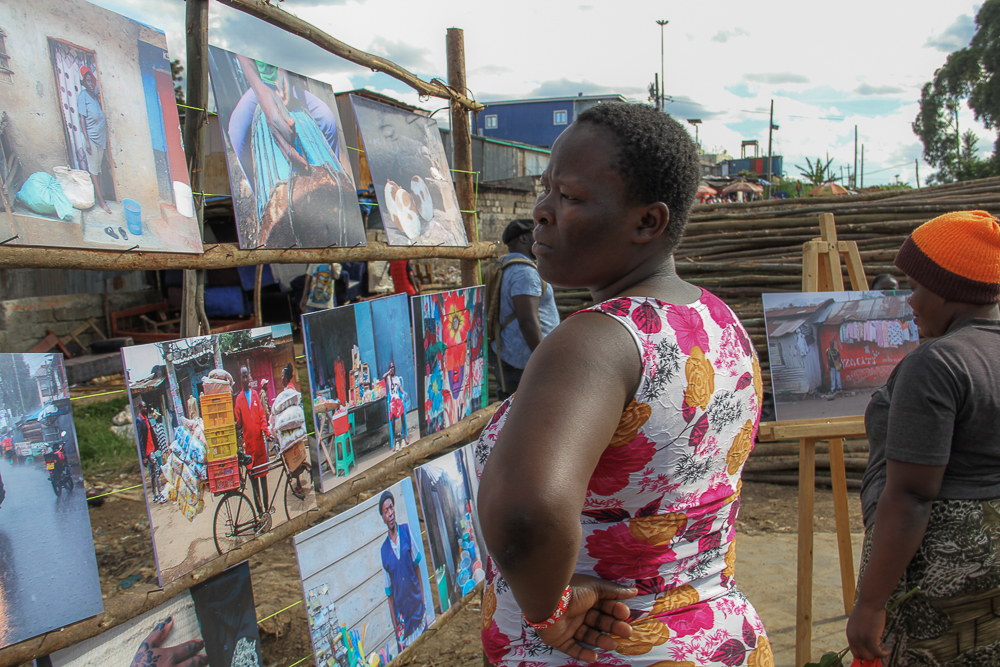
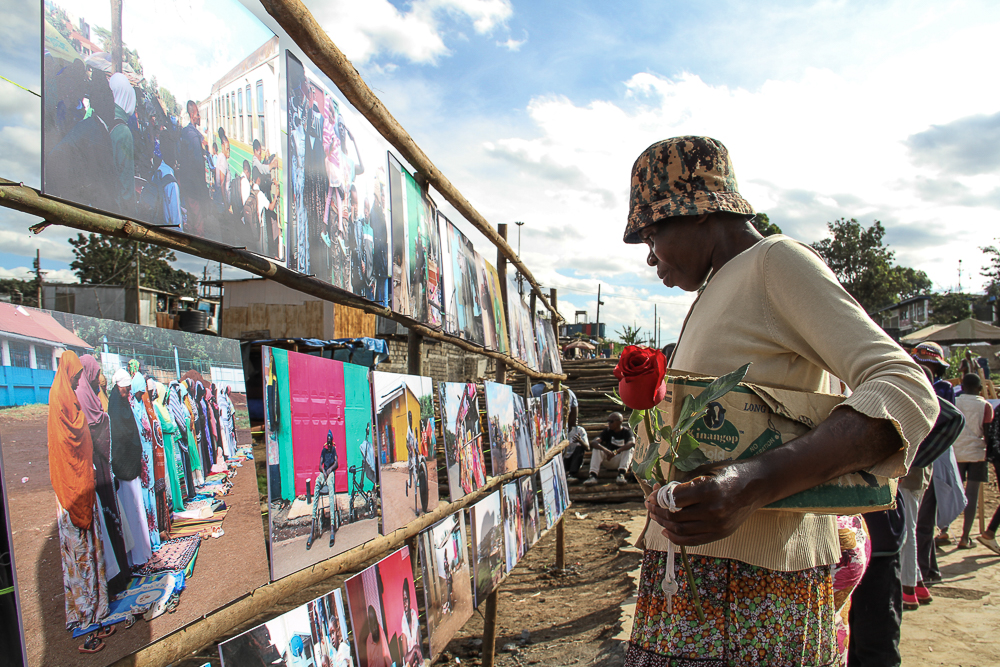
Women viewing exhibitions at the Kamukunji grounds.
Jimmy Furahaa, the exhibiting photographer says that Kibra is one of the most photographed places in Nairobi, yet the people who live here rarely get to see the final images, making the process feel more like taking away than sharing. He admits that exhibitions are usually designed for standard gallery spaces, but setting this one anywhere other than Kibra would have completely missed the focus points.
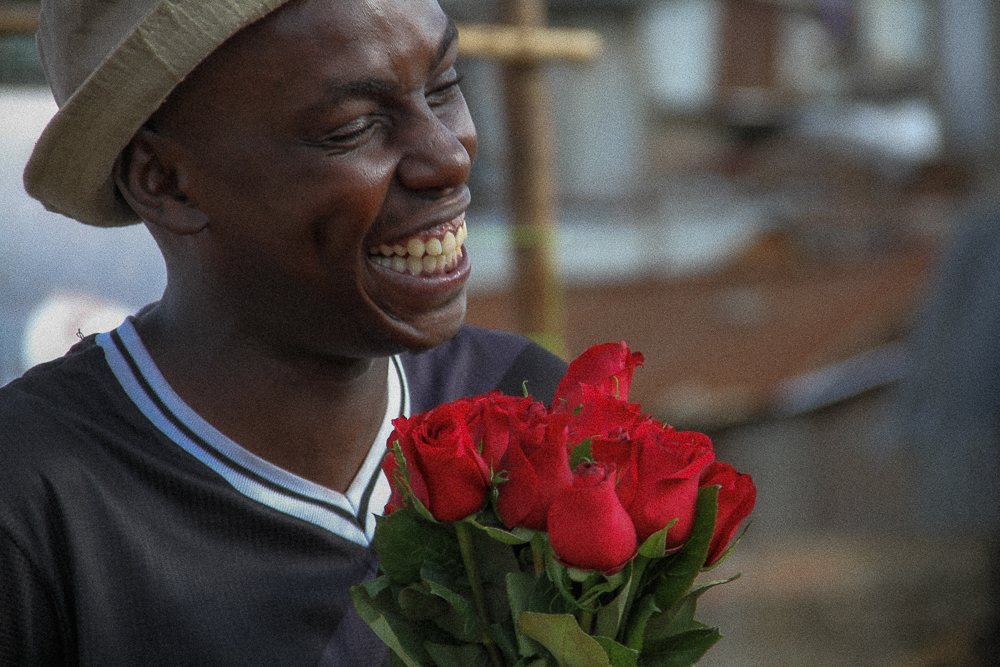
Jimmy Furaha at the exhibition site
'Hosting the exhibition directly within the community on Mother's Day was a way of returning the art to the people who inspired it, transforming a history of extraction into an act of connection. The response was overwhelming as children recognized themselves and ran home to bring entire families, people engaged in deep conversations about the work, and the excitement was so palpable that everyone wanted to be photographed'. He asserts.
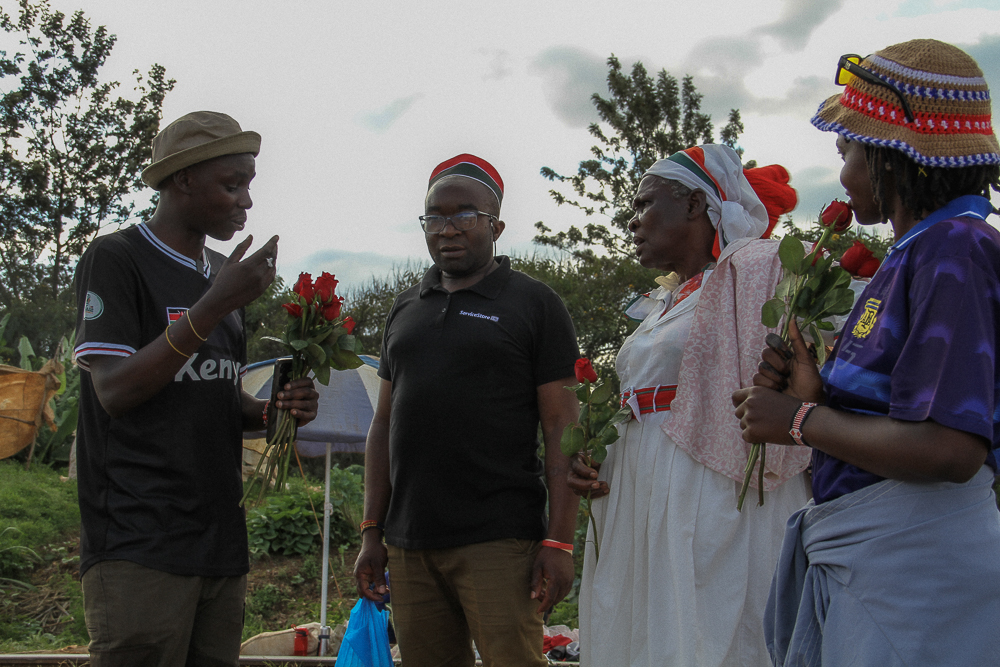
Jimmy Furaha talking with community members about the exhibition
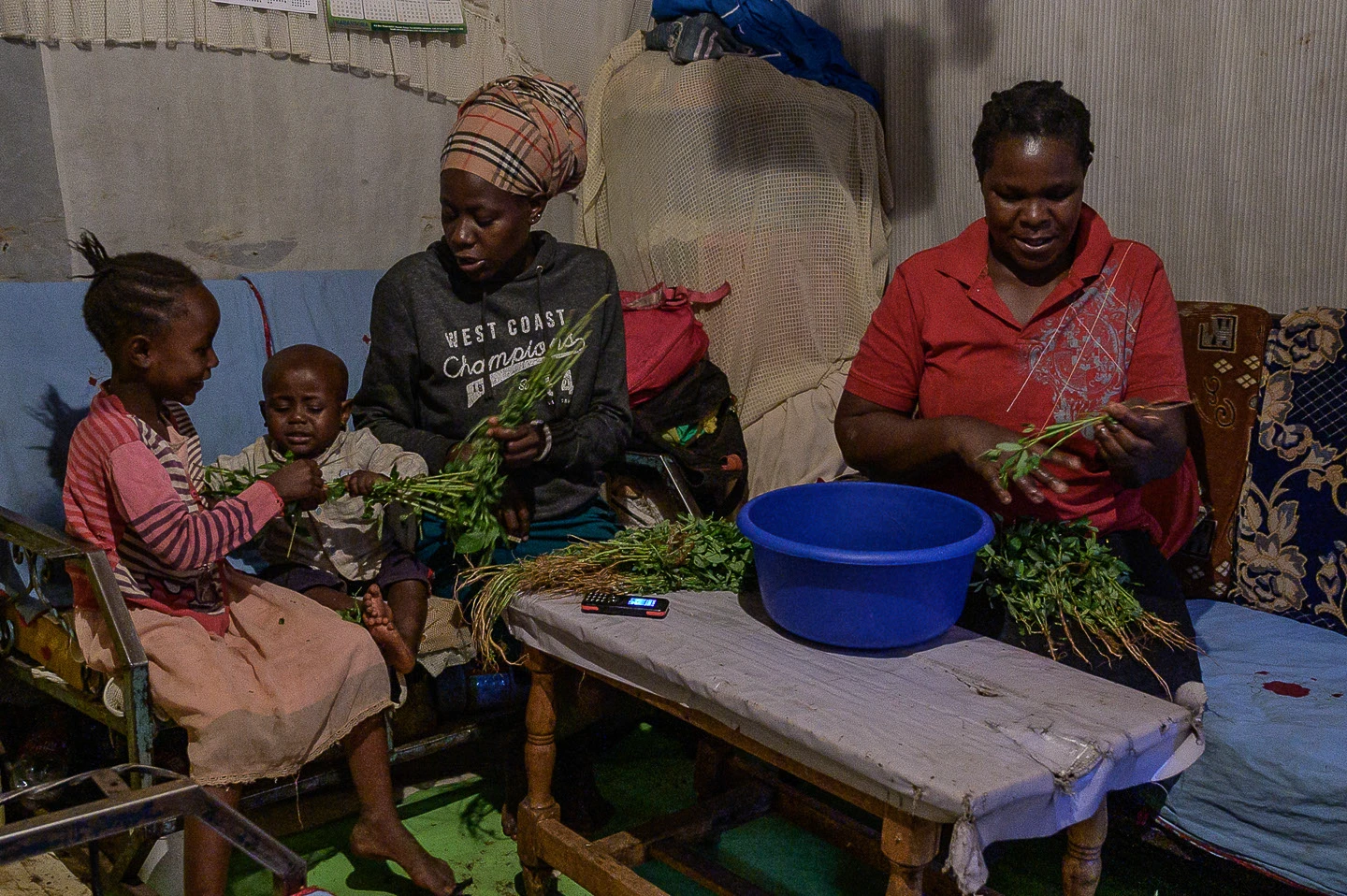
When local youth and young mothers pick up cameras, the visuals transforms completely. We no longer see passive statistics. Instead, exhibitions feature the intense focus of local artisans, children playing under dramatic sunset lighting, and the vibrant, kinetic energy of community celebrations. Bringing the art back home turned the exhibition into a shared experience, proving that the images do not just belong to the photographers, they belong to Kibra.
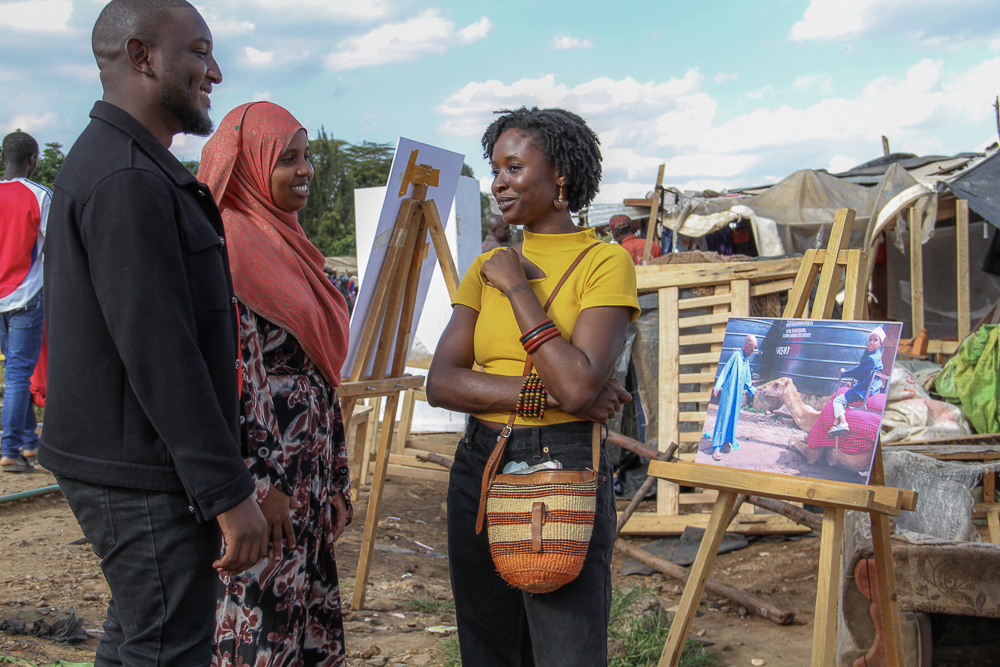
Viewers at the exhibition
The ultimate triumph of this movement is its disruption of traditional art ecosystems. Fine-art photography has been confined to high end commercial galleries in affluent neighborhoods. Now, the community is building its own.
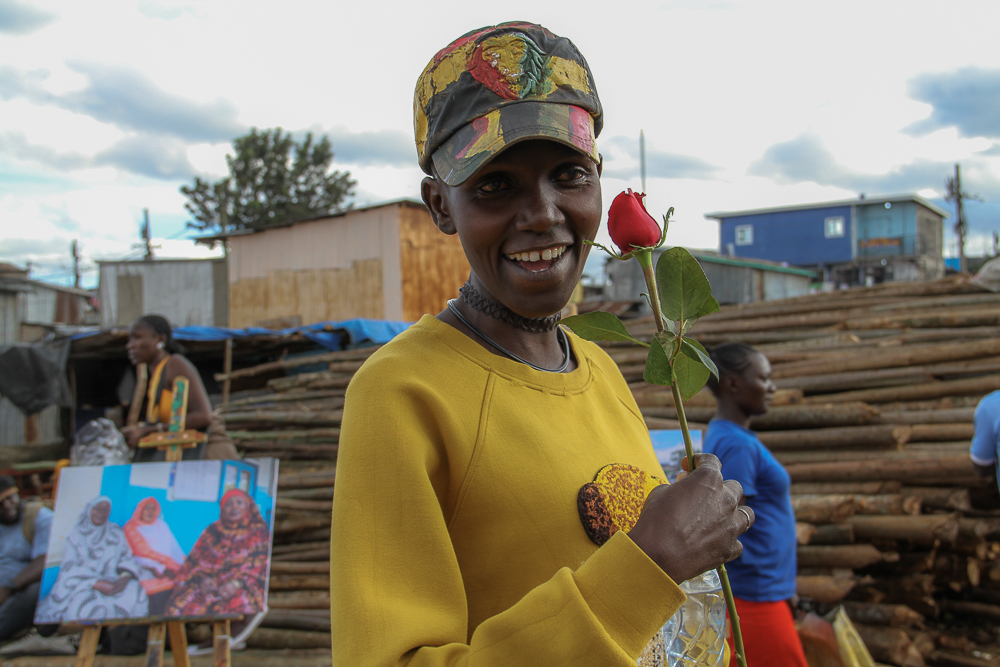
A mother's day photo exhibition
Jimmy Furahaa, the exhibiting photographer says that Kibra is one of the most photographed places in Nairobi, yet the people who live here rarely get to see the final images, making the process feel more like taking away than sharing.
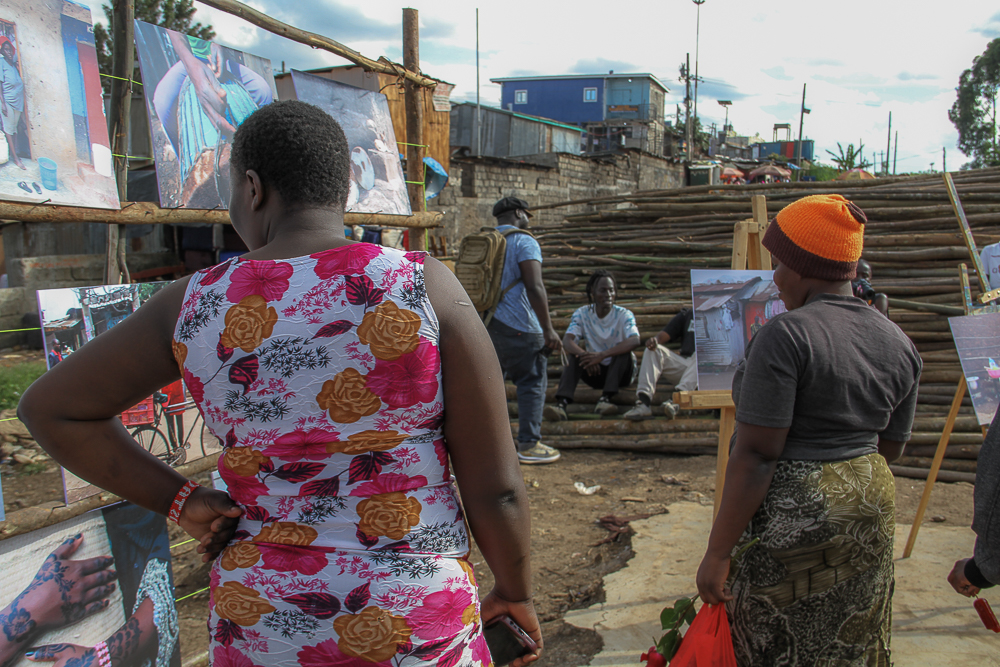
Viewers at the exhibition
He admits that exhibitions are usually designed for standard gallery spaces, but setting this one anywhere other than Kibra would have completely missed the focus points.
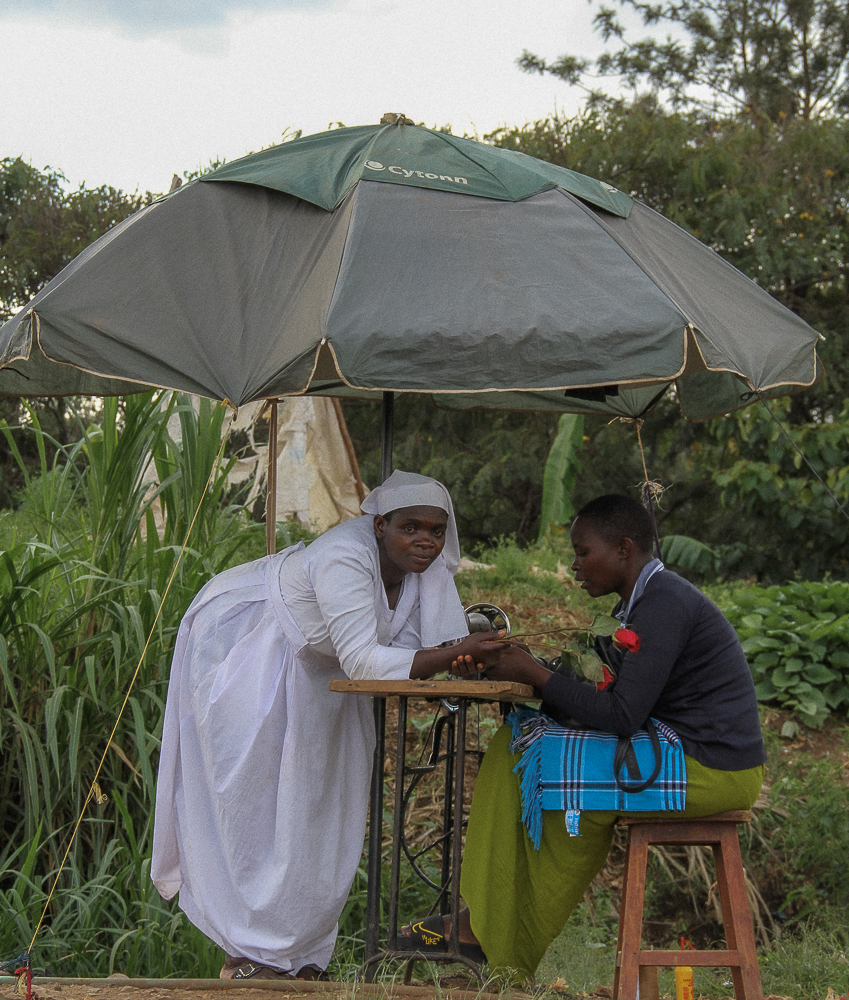
Women having a conversation at their work place near the site of the exhibition
Hosting the exhibition directly within the community on Mother's Day was a way of returning the art to the people who inspired it, transforming a history of extraction into an act of connection.
The response was overwhelming as children recognized themselves and ran home to bring entire families, people engaged in deep conversations about the work, and the excitement was so palpable that everyone wanted to be photographed.
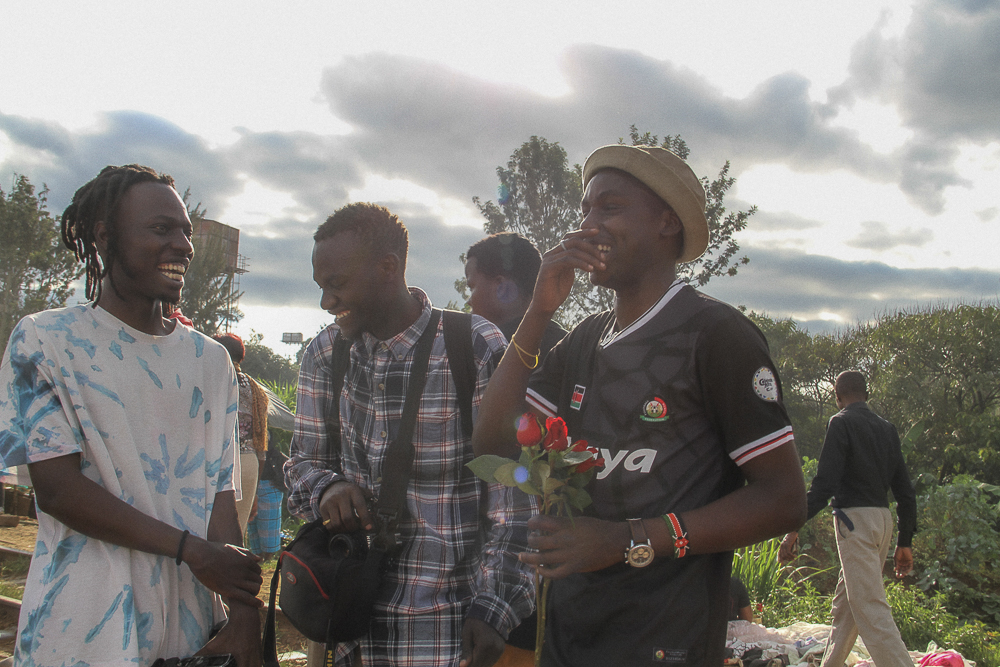
Other photographers supporting their fellow collegues during the exhibition
When local youth and young mothers pick up cameras, the visuals transforms completely. We no longer see passive statistics. Instead, exhibitions feature the intense focus of local artisans, children playing under dramatic sunset lighting, and the vibrant, kinetic energy of community celebrations. Bringing the art back home turned the exhibition into a shared experience, proving that the images do not just belong to the photographers, they belong to Kibra.
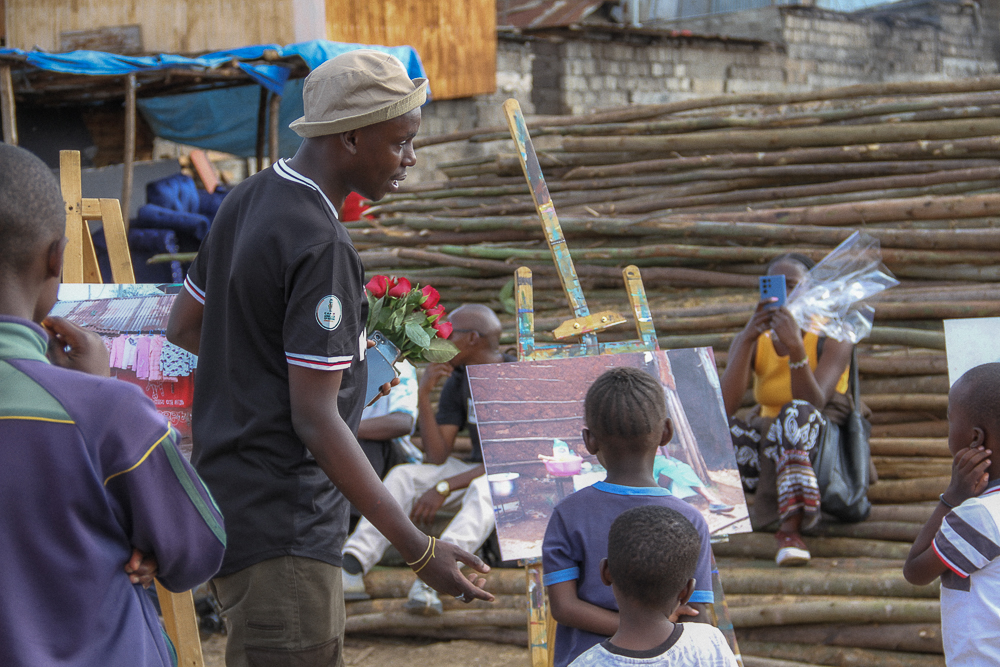
Jimmy showing kids around the exhibition
The ultimate triumph of this movement is its disruption of traditional art ecosystems. Fine-art photography has been confined to high end commercial galleries in affluent neighborhoods. Now, the community is building its own. These open, accessible spaces ensure that the community members who populate the photographs can actively participate as viewers, critics, and owners of the art. By removing the gatekeepers, local photographers are successfully turning everyday neighbors into fine art subjects, permanently altering the cultural memory of this place.