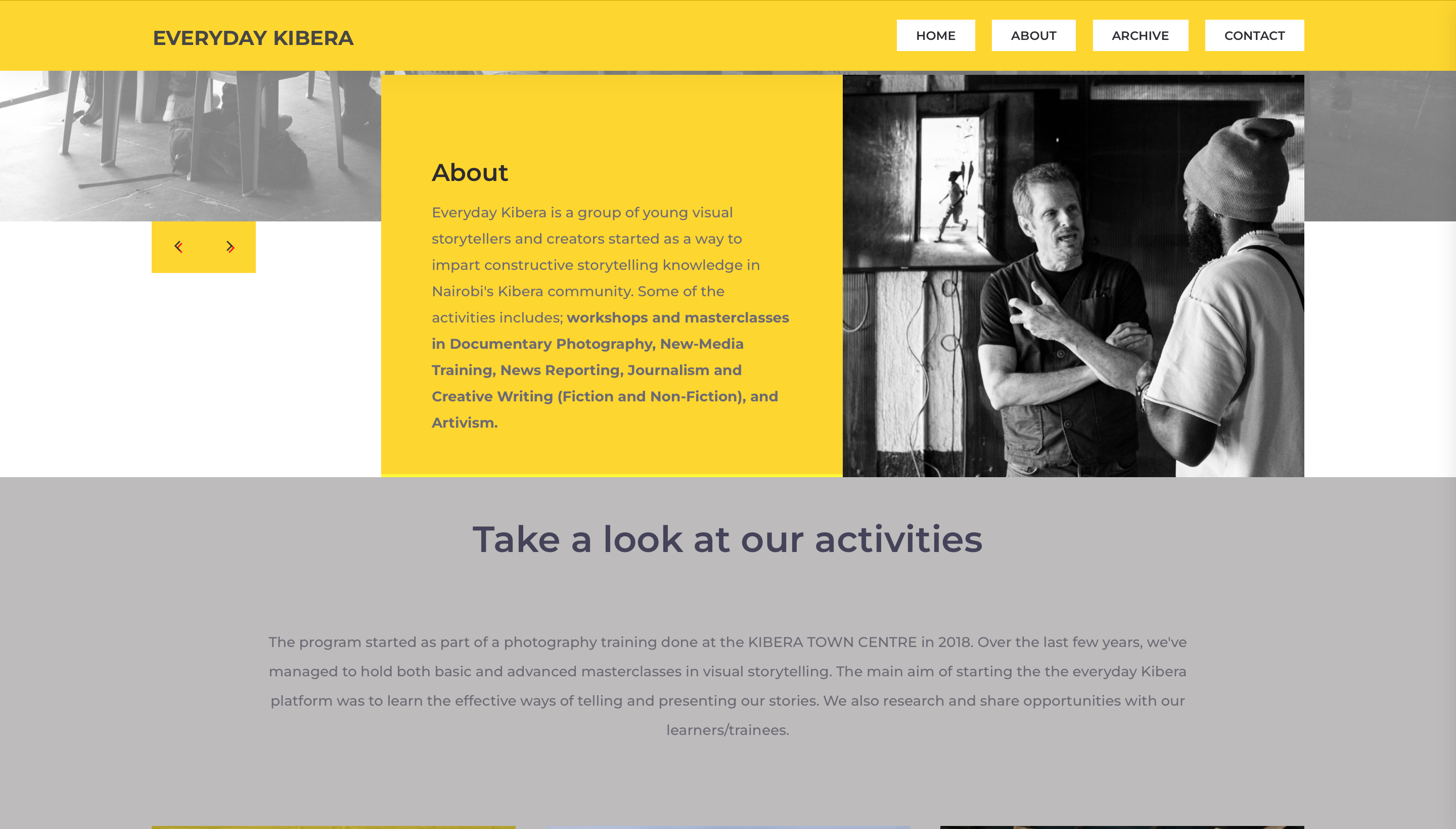
A few years ago, while training a group of enthusiastic young storytellers, mostly photojournalists and documentary photographers, at the Kibera Town Centre, I found myself asking some critical questions. Every day after summarizing the sessions, I wondered where they would take all the stories they were about to produce, because I was certain that in the next few years, they were going to generate a massive amount of work.Our visual storytelling workshops have been led by some of world's leading journalists, photographers, writers, and curators, making our program distinct among those available locally. Looking back, I can confidently say it was a success. Some of our pioneer trainees now work for international photo agencies, some represent global camera brands, and a few are working as corporate communication consultants.
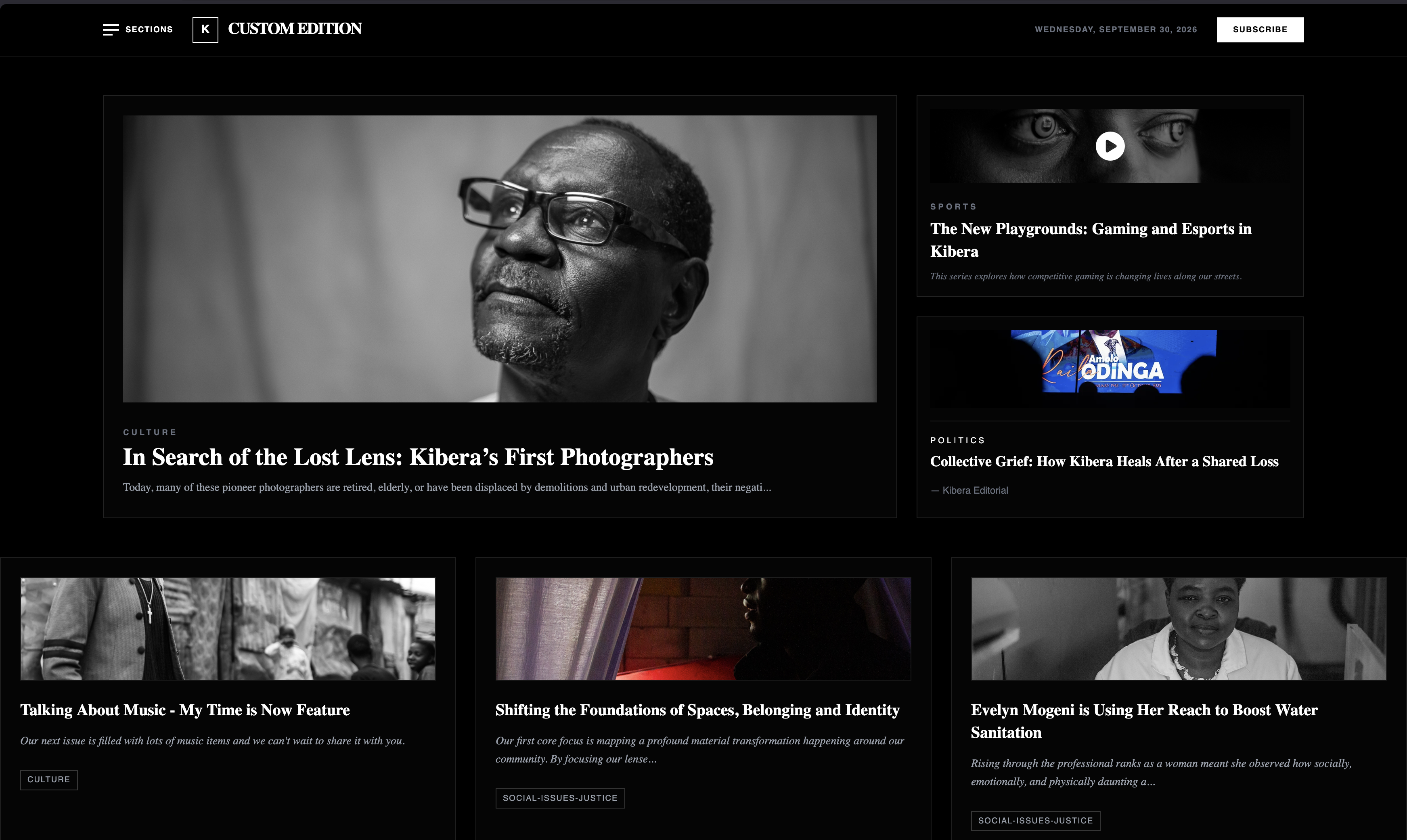
With the dynamic shifts occurring in visual journalism today, it is becoming increasingly vital that we harness the power of local storytelling. We are a collective of photographers, documentary visualists, photojournalists, writers, and designers eager to curate formats and tones that champion local narratives.Hence KIBERANET, a dedicated space where we can fully share stories that are close to home. The platform is built on the robust Laravel framework, leveraging the fundamental technologies required to scale a multi-media ecosystem. An article detailing how we engineered the system will be featured in our next issue.
We realize how demanding it is to run a platform of this scale. If you are passionate about developing local media, sharing skills, or engaging with our collective, please reach out to us.
Thank you,Gordwin Odhiambo
← Back to Top Stories
Read next
A Confluence of Movement: Ballet, Capoeira, and Tradition
In a rapidly changing urban landscape where open spaces are disappearing, safeguarding these creative safe havens is vital.